₹0.00

No products in the cart.

Free Delivery & 60-Day Returns* - Everyday!

₹0.00

No products in the cart.

Home Forestry Plants Ginger (Zingiber officinale)

Ginger (Zingiber officinale)

Original price was: ₹140.00.Current price is: ₹70.00.
Sale!

OVERVIEW

Ginger (Zingiber officinale)
Local Indian Name:
  • Hindi: अदरक (Adrak)
  • Bengali: আদা (Ada)
  • Tamil: இஞ்சி (Inji)
  • Telugu: అల్లం (Allam)
  • Malayalam: ഇഞ്ചി (Inchi)
  • Kannada: ಶುಂಠಿ (Shunti)
  • Marathi: आले (Ale)
Scientific Name: Zingiber officinale
Family: Zingiberaceae (Ginger Family)
  • Category: Herbaceous Perennial Plant
  • Subcategory: Medicinal and Spice Crop
Native Region:
  • Southeast Asia and the Indian Subcontinent
  • Cultivated widely in India, China, Indonesia, Nigeria, Thailand, and Brazil
Introduction
Ginger (Zingiber officinale) is a perennial herb known for its spicy, aromatic rhizomes that are widely used in culinary, medicinal, and industrial applications. It is one of the most important spice crops in India and plays a vital role in traditional medicine, food preparation, and herbal treatments.
Importance & Benefits
Economic Importance:
  • Major cash crop in India, China, and Southeast Asia.
  • Used in spice industries, pharmaceuticals, and cosmetics.
  • High export demand for dried, powdered, and oil-extracted ginger.
Health & Medicinal Benefits:
  • Anti-inflammatory and digestive aid (used in Ayurveda and traditional medicine).
  • Helps in cold, cough, nausea, and gastric disorders.
  • Rich in antioxidants and bioactive compounds like gingerol.
  • Used in aromatherapy and herbal treatments.
Culinary Uses:
  • Essential in Indian, Chinese, and Southeast Asian cuisine.
  • Used in beverages, pickles, candies, and processed foods.
  • Ginger tea is popular for its immune-boosting properties.
Description and Cultivation
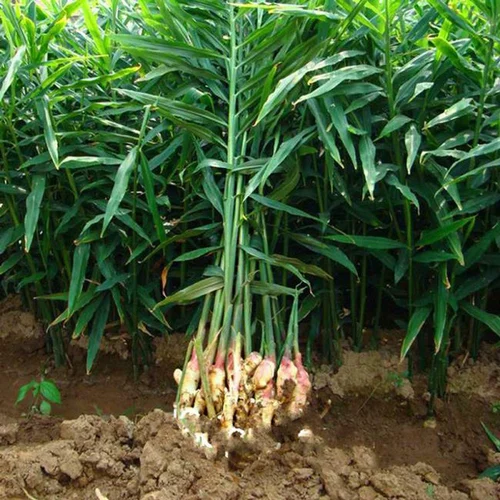
Botanical Description:
  • Height: 2-4 feet tall.
  • Leaves: Long, narrow, green.
  • Flowers: Small, yellowish-green with purple markings.
  • Rhizomes: Fleshy, aromatic underground stems (harvested part).
Major Growing Regions in India:
  • Kerala, Karnataka, Assam, Meghalaya, Sikkim, Odisha, Maharashtra, and Tamil Nadu.
Varieties and Cultivars
Popular Indian Varieties:
  1. Nadia (West Bengal) – High fiber content.
  2. IISR Varada (Kerala) – High yield and disease-resistant.
  3. Suprabha (Odisha) – Suitable for organic farming.
  4. Himachal Pradesh Local – Cold-tolerant variety.
International Varieties:
  • Chinese Ginger – Lower fiber, high essential oil.
  • Jamaican Ginger – Premium quality, rich in oils.
Location and Light
  • Prefers warm, humid climates.
  • Requires partial shade; direct sunlight can dry out soil.
  • Thrives in tropical and subtropical regions.
Soil Preparation
  • Well-drained, loamy or sandy loam soil rich in organic matter.
  • pH range: 5.5 – 6.5 (slightly acidic to neutral).
  • Organic compost and farmyard manure improve soil fertility.
Planting
  • Propagation: Through rhizome cuttings (not seeds).
  • Best planting time: April – June (pre-monsoon season).
  • Spacing: 25 cm × 30 cm for proper aeration and growth.
  • Mulching: Essential to retain moisture and suppress weeds.
Watering
  • Requires regular watering, especially during early growth stages.
  • Avoid water stagnation, which can cause rhizome rot.
  • Drip irrigation is preferred for efficient water management.
Pruning
  • Not required extensively.
  • Remove damaged leaves and stems for better yield.
Pest and Disease Management
Common Pests:
  1. Shoot Borer – Damages young shoots.
  2. Rhizome Fly – Lays eggs inside rhizomes.
  3. Aphids and Mites – Affect plant growth.
Common Diseases:
  1. Rhizome Rot – Caused by excess moisture.
  2. Leaf Spot Disease – Leads to yellowing and drying of leaves.
  3. Bacterial Wilt – Affects vascular system, causing wilting.
Management Practices:
  • Neem oil spray for pest control.
  • Use biofungicides to prevent fungal diseases.
  • Avoid overwatering and ensure proper drainage.
Environmental Conditions
  • Climate: Warm, humid, tropical and subtropical.
  • Temperature: 20°C – 35°C.
  • Rainfall: 1500 – 2500 mm annually.
  • Altitude: Best grown at 300 – 1500 meters above sea level.
Propagation
  • Rhizome Propagation: Best method using disease-free rhizomes.
  • Seedling Method: Less common; used in hybrid breeding.
  • Tissue Culture: Used for commercial large-scale production.
Uses
Commercial Uses:
  • Spice Industry – Used in powdered, dried, and oil extract forms.
  • Food Processing Industry – Essential in candies, beverages, and pickles.
  • Pharmaceuticals – Used in capsules, syrups, and herbal medicines.
Agricultural & Ecological Uses:
  • Grown as an intercrop with coconut, areca nut, and fruit trees.
  • Soil conservation – Prevents erosion in hilly areas.
Medicinal Uses:
  • Used in Ayurveda, Unani, and Chinese medicine for digestion and pain relief.
  • Ginger oil and extracts used in home remedies and aromatherapy.
Monetary Benefits
  • Yield per acre: 6-10 tons of fresh ginger.
  • Market price: ₹40 – ₹100 per kg (varies seasonally).
  • Processed ginger products (dry ginger, oil, powder) have higher value.
  • Annual income per acre: ₹3 – 7 lakhs (based on variety and farming methods).
  • High export demand for organic ginger in Europe and the Middle East.
References
  1. Indian Institute of Spices Research (IISR) – Ginger Cultivation Guide
  2. National Horticulture Board (NHB) – Ginger Farming Techniques
  3. ICAR (Indian Council of Agricultural Research) – Ginger Disease Management
  4. FAO (Food and Agriculture Organization) – Global Ginger Trade & Production Data

RELATED PRODUCTS

REVIEWS

Reviews

There are no reviews yet.

Be the first to review “Ginger (Zingiber officinale)”

Your email address will not be published. Required fields are marked *