Native to South Asia, particularly India and China.
Widely cultivated in tropical and subtropical regions worldwide.
Introduction
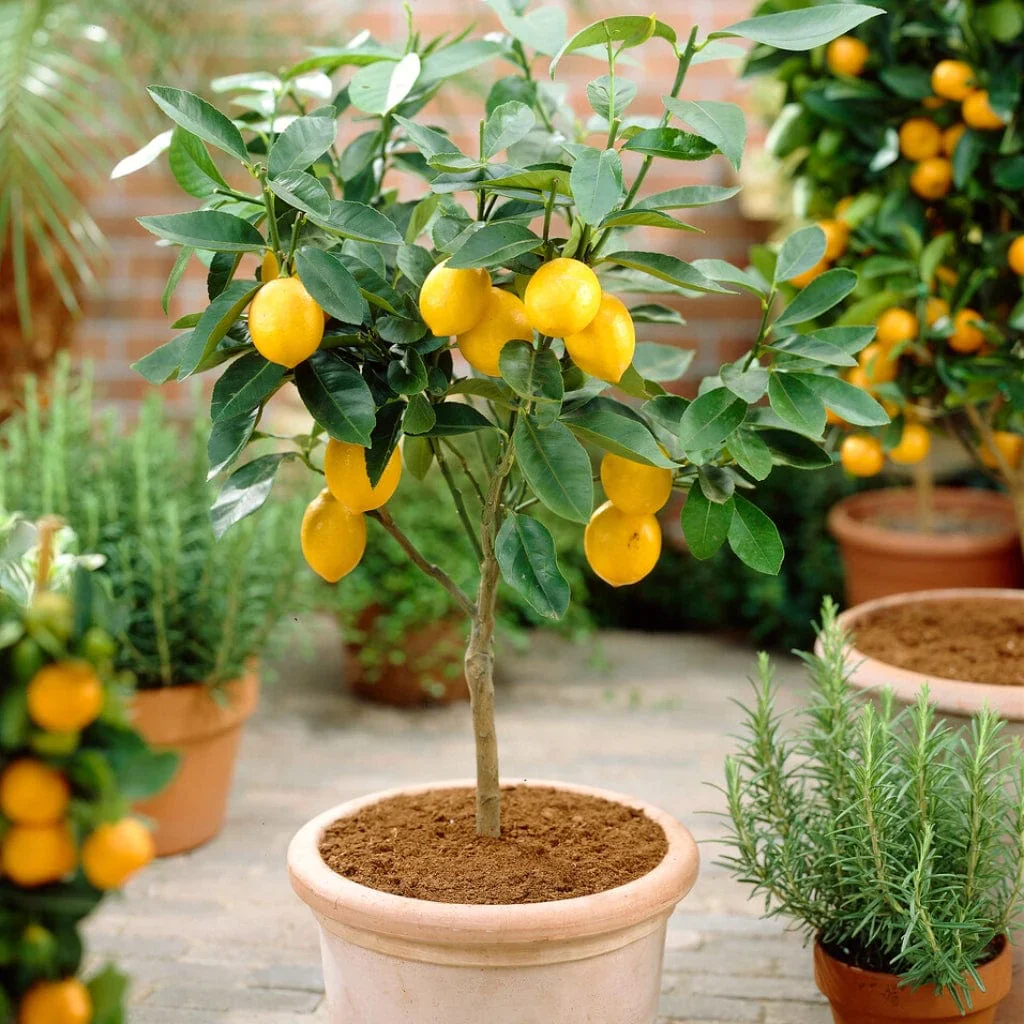
Lemon (Citrus limon) is a small evergreen fruit tree known for its high vitamin C content, medicinal properties, and culinary uses. It is widely cultivated in India for domestic consumption and commercial trade. Lemons are valued for their refreshing juice, essential oils, and antioxidant-rich peel.
Importance & Benefits
Health & Nutritional Benefits:
Rich in Vitamin C, boosting immunity.
Antioxidant properties help fight infections.
Aids digestion and supports liver function.
Promotes skin health and detoxifies the body.
Economic Benefits:
High market demand for fresh lemons, lemon juice, and essential oils.
Used in pharmaceuticals, cosmetics, and food industries.
Can be grown in small-scale home gardens and large commercial orchards.
Environmental Benefits:
Drought-resistant and suitable for dryland farming.
Improves air quality and adds aesthetic value to landscapes.
Description and Cultivation
Botanical Description:
Height: Grows up to 3-6 meters.
Trunk & Bark: Thin bark with small thorns on branches.
Leaves: Dark green, oval, and glossy.
Flowers: Small, white, and fragrant.
Fruits:Oval to round, yellow, with juicy pulp and seeds.
Major Growing Regions in India:
Maharashtra, Andhra Pradesh, Tamil Nadu, Gujarat, Rajasthan, and Assam.
Varieties and Cultivars
Popular Lemon Varieties in India:
Kagzi Nimbu – Thin-skinned, juicy, widely grown.
Assam Lemon (Kaji Nemu) – Large, aromatic, preferred in Northeast India.
Pant Lemon-1 & 2 – High-yield varieties developed for commercial cultivation.
Lisbon Lemon – Highly productive and drought-resistant.
Eureka Lemon – Ideal for home gardening.
Location and Light
Climate: Prefers tropical and subtropical climates.
Sunlight: Requires 6-8 hours of direct sunlight daily.
Elevation: Grows well up to 1,500 meters above sea level.
Soil Preparation
Type: Well-drained sandy loam or alluvial soil.
pH Range:5.5 to 7.5 (slightly acidic to neutral).
Soil Enrichment: Add organic compost and farmyard manure for better growth.
Planting
Best Planting Season:June to August (monsoon season).
Spacing:4-6 meters apart to allow proper root and canopy growth.
Pit Size:50 cm x 50 cm x 50 cm, filled with organic matter before planting.
Watering
Young Plants: Water twice a week during the first 6 months.
Mature Trees:Water once every 7-10 days, depending on soil moisture.
Drip Irrigation: Preferred for commercial plantations.
Pruning
Purpose: Maintains tree shape, improves fruit quality, and removes diseased branches.
Timing: Best done in winter or post-harvest season.
Method: Remove suckers, dead branches, and overcrowded shoots.
Pest and Disease Management
Common Pests:
Citrus Psylla: Causes leaf curling and stunted growth.
Aphids & Mites: Damage leaves and new shoots.
Fruit Borers: Affect fruit quality.
Common Diseases:
Citrus Canker: Bacterial infection causing lesions on leaves and fruit.
Root Rot: Fungal disease due to overwatering.
Gummosis: Leads to bark decay.
Management Practices:
Organic Methods: Use neem oil spray and insect traps.
Chemical Control: Apply fungicides and mild pesticides as needed.
Preventive Measures:Avoid waterlogging, ensure proper air circulation, and prune infected parts.
Grafting & Budding: Preferred for commercial plantations.
Seeds: Used for research and selective breeding.
Cuttings & Layering: Alternative propagation methods.
Uses
Culinary Uses:
Fresh fruit used in juices, salads, and beverages.
Lemon zest and pulp used in cooking, baking, and preserves.
Industrial Uses:
Lemon oil extracted for cosmetics and aromatherapy.
Used in soap, detergent, and pharmaceutical industries.
Medicinal Uses:
Treats sore throat, indigestion, and common colds.
Antioxidant-rich peel used in herbal teas and skincare products.
Monetary Benefits
High Market Demand:
Fresh lemons, lemon juice, and essential oils have consistent market demand.
Income Potential:
One acre of lemon orchard yields around 10-15 tons of fruit annually.
Wholesale price: ₹30-100 per kg, depending on the season.
Lemon oil fetches ₹5,000-10,000 per liter.
Government Subsidies:
Eligible for support under National Horticulture Mission (NHM) and State Horticulture Departments.
References:
Indian Council of Agricultural Research (ICAR) Reports on Citrus Cultivation.
National Horticulture Board (NHB) Guidelines for Lemon Farming.
Ayurvedic Texts on Medicinal Properties of Citrus limon.
Market Surveys and Agricultural Research Papers on Lemon Farming Trends.
Lemon (Citrus limon) is a versatile fruit with significant economic, medicinal, and environmental benefits. Its high yield, commercial viability, and adaptability make it a profitable crop for farmers and a valuable addition to home gardens.


Reviews
There are no reviews yet.