₹399.00Original price was: ₹399.00.₹299.00Current price is: ₹299.00.
Sale!
OVERVIEW
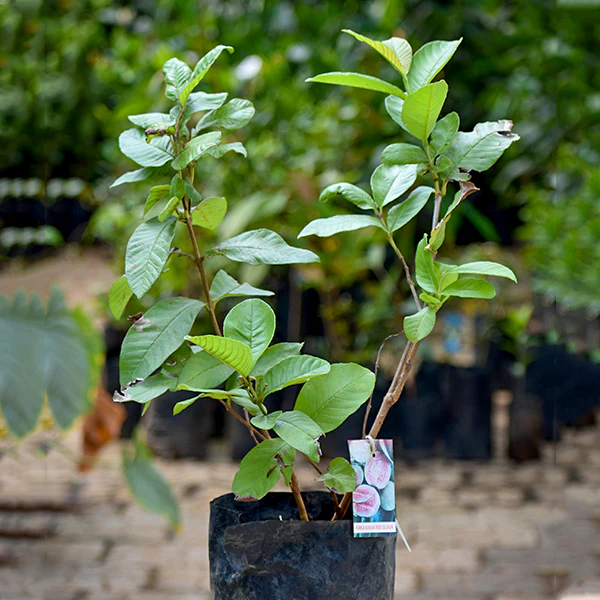
Guava (Psidium guajava)
Local Indian Name: Amrud
Scientific Name:Psidium guajava
Family: Myrtaceae
Category and Subcategory: Fruit-bearing Tree, Tropical/Subtropical Fruit
Native Region: Tropical America
Introduction
Guava (Psidium guajava) is a tropical fruit native to Central and South America. Introduced to India in the 17th century, it has become one of the country’s most important commercial fruits, valued for its nutritional benefits and versatility.
Importance & Benefits
Nutritional Value: Rich in vitamin C, surpassing even citrus fruits, and a good source of vitamins A and B, calcium, phosphorus, and iron.
Economic Significance: Guava cultivation is a profitable venture due to its low maintenance and high yield, contributing significantly to the agricultural economy.
Health Benefits: Known for its antioxidant properties, guava aids in digestion, boosts immunity, and supports heart health.
Description and Cultivation
Guava trees are hardy and can grow up to 10 meters in height. They have smooth, mottled bark and bear white flowers that develop into round or oval fruits. The fruit’s skin varies from green to yellow, and the flesh can be white, pink, or red, depending on the variety. Guavas thrive in tropical and subtropical climates up to 1,500 meters above sea level and can tolerate a range of soil types, though they prefer well-drained soils with a pH of 4.5 to 8.2.
Varieties and Cultivars
Several guava varieties are cultivated in India, each with unique characteristics:
Allahabad Safeda: Known for its large, round fruits with smooth, yellowish-white skin and sweet white flesh.
Lucknow 49 (Sardar): Features large, roundish-ovate fruits with primrose-yellow skin and white, sweet pulp.
Lalit: A hybrid variety with medium-sized, round fruits and pink flesh, known for its high yield and good quality.
Arka Mridula: Developed by selection, this variety has medium-sized fruits with white flesh and few seeds, suitable for processing.
Location and Light
Sunlight: Guava trees require full sunlight for optimal growth and fruiting.
Climate: They thrive in both tropical and subtropical regions, tolerating high temperatures and drought conditions. However, young plants are susceptible to severe frost.
Soil Preparation
Type: Adaptable to various soil types, from heavy clay to light sandy soils. Best quality fruits are produced in rich, well-drained soils.
pH Level: Ideal soil pH ranges from 4.5 to 8.2.
Planting
Spacing: Traditional spacing is 6x6 meters; however, high-density planting (3x6 meters) has been found to increase productivity.
Method: Propagation is commonly done through air-layering (marcotting) or grafting to maintain desirable traits.
Watering
Frequency: Regular watering is essential, especially during dry periods. However, guava trees cannot withstand waterlogging.
Method: Irrigate at intervals that allow the soil to dry slightly between watering to prevent root rot.
Pruning
Purpose: Pruning helps in maintaining tree shape, removing dead or diseased branches, and encouraging new growth.
Timing: The best time for pruning is after the harvest and before the onset of new growth.
Pest and Disease Management
Common Pests: Fruit flies, guava scale, and mealybugs.
Diseases: Wilt disease, anthracnose, and root rot.
Control Measures: Regular monitoring, maintaining orchard hygiene, and using appropriate organic or chemical treatments as needed.
Environmental Conditions
Temperature: Optimal growth occurs between 23°C to 28°C. Young plants are sensitive to frost.
Rainfall: An annual rainfall of about 100 cm is sufficient, preferably during the rainy season (July-September).
Propagation
Methods: Common methods include air-layering (marcotting), grafting, and budding.
Best Practices: Using healthy, disease-free plant material and selecting appropriate rootstocks are crucial for successful propagation.
Uses
Culinary: Consumed fresh or processed into jams, jellies, juices, and candies.
Medicinal: Guava leaves and bark are used in traditional medicine for their antimicrobial and anti-inflammatory properties.
Industrial: Employed in the production of beverages, confectioneries, and cosmetics.
Monetary Benefits
Market Demand: Guava is in high demand both domestically and internationally, with India being the largest producer.
Economic Returns: Due to its low cultivation cost and high yield, guava


Reviews
There are no reviews yet.